
Personable and private, the leading London art dealer Sadie Coles is not usually one for speaking out. But when we meet in Mayfair’s gallery district, this tireless champion of contemporary art has strong words about the capital’s creative credentials at a time when others have been quick to do them down. “I defy anyone not to recognise the energy, the innovation and the entrepreneurship that this city has,” she says.
Recent years, and particularly the Brexit vote, have not helped London’s art market. One beneficiary has been Paris, which has seen a wave of gallery and auction house openings. Coles acknowledges that “post Brexit, there was an impact on business [in London], not just art businesses but all businesses”, something that was “masked by Covid and only became clear in the last two years, really”. But, she adds, “we are good at being innovative and creative at times of crisis here”.
What’s more, Coles is putting her money where her mouth is. This week she opens her third space in the capital, in the historic 17 Savile Row, a six-storey Mayfair townhouse that was home to the Burlington Fine Arts Club between 1870 and 1952. Her other galleries are nearby, one on Bury Street in St James’s and another in Soho’s Kingly Street, a larger, more industrial space than the mini-museum feel of Savile Row.
She sets out her stall on Savile Row with a solo show of the South African market darling Lisa Brice. Details are “top secret” until it opens on October 15, but the gallerist does promise “multi-compositions of empowered women”, with three distinct themes for the new gallery’s three exhibition spaces. Brice’s trademark references to 19th-century painting will chime with the building, Coles notes.


There are echoes, too, of the shows she put on when she opened her first gallery, Sadie Coles HQ, back in 1997: of John Currin, a figurative painter who, like Brice, puts a contemporary twist on classical tropes, and Sarah Lucas, a YBA sensation whose exuberant feminism still resonates today.
The unusual “HQ” in the gallery’s name, Coles says, “implies that things are also going on elsewhere”, and was integral from the start. Currin’s show hung in the Heddon Street HQ while Lucas showed in a pop-up space in Clerkenwell. The military connotation of HQ is also “a nod to my father”, who worked for the Royal Navy, though, Coles says, “he is totally mystified by the whole
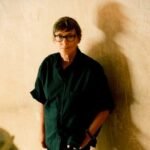
Meeting Lucas in 1990 at a dinner hosted by the Anthony d’Offay gallery, where Coles began her commercial career, was “pivotal to me and the gallery”, she says. She describes the artist as “anarchic, fun, naughty and really clever . . . a person who raises the bar all the time”. Both Lucas and Currin have stuck with Coles, not a given in the often fickle art market, and her gallery today represents more than 50 others including Richard Prince, Ugo Rondinone and Monster Chetwynd.

Coles describes today’s art scene as “enormously different” from when she started out. “In 1997, everything was small, in terms of numbers of artists, global locations, the prices of things, the price of rent. It has scaled up enormously.” But, she finds, “funnily enough, I would say that we are now back in an era of very dynamic, do-it-yourself energy, in London at least, which is so fantastic to see.” In some ways, she says, at a time of more economic strain, “it is a closer community now than it has been in the past. Everybody supports each other.” She namechecks galleries such as Ginny on Frederick, Soft Opening and Brunette Coleman as among the best of the new generation, though she doesn’t like to restrict her picks as “there are so many good ones”.


Such generosity of spirit is characteristic of Coles. She seemed to be instrumental in every WhatsApp help group and galvanising project in the UK during the Covid-19 pandemic. She is modest — “It is important to be collegial” — but does take some pride that the London Gallery Forum WhatsApp group is still going and that “as an administrator, I’m asked to add someone to it every week”.
Coles is a supporter of the emerging scene in other practical ways. Since 2021, she has given over a small, self-contained space in her Soho gallery — known as The Shop at Sadie Coles HQ — to house emerging galleries, non-profits or artists “who don’t have a presence in the market’s typical areas”. These have included the graduating students of the nearby Royal Academy Schools and Bolanle Contemporary, an online platform run by Bolanle Tajudeen, a curator who champions artists of colour and about whom Coles is full of praise, eagerly pointing me to her Instagram account. Coles has also developed a free, monthly live performance programme, called Gargle.

Behind it all is an enthusiasm for today’s rising generation. “It is not about me being ‘mine host’, I am learning. It is so important to be connected to young people. They are the artists, the thinkers, the writers, the collectors of the future.” At Gargle, she says with delight, “I’m the oldest person there by about three decades!” Confessing to a taste for nightclubbing in the 1980s, Coles, 62, now seems more than happy to pass on the baton: “I’m not hanging out late at night now,” she says, though she retains a gamine look in an on-trend oversized suit and hard-wearing shoes.
An appreciation of youth and the excitement of what it brings have been key to the gallery’s continued success, she says. “We’ve been good listeners, very responsive to changes.” Her latest charge is Karimah Ashadu, a British-born Nigerian filmmaker who won the Silver Lion for promising young artist at last year’s Venice Biennale and whose solo show opens at Camden Art Centre on October 9 (it runs to March 22, 2026).

As other international gallerists complain of burnout, Coles is mindful of not overstretching herself, one reason why she has never had a permanent space outside of London. “I don’t think growth is always necessary,” she says. “I just want to have a really good gallery and the way I feel I can do that is by being hands on and doing it where I can be in control.”
Coles has also responded to what she sees as “a definite change in taste” among the younger generation, including an appetite for film that was previously hard to ignite. “It is entirely to do with iPhones and our comfortableness with the moving image in our lives,” she says. She is also attuned to the geographic shifts in buyers and is using art fairs to meet demand where she sees it. This year, she added Miart in Milan and Tokyo Gendai to the gallery’s schedule.
London, though, remains fundamental. “The scene is as fabulous and as dynamic as in the 1990s, there is so much happening in so many postcodes,” she says. “I think there’s really a very authentic situation at the moment, where people are literally growing their communities around their galleries and often in temporary spaces or spaces that are off grid. Now is an exciting time to discover young art in London.”
Find out about our latest stories first — follow FT Weekend on Instagram, Bluesky and X, and sign up to receive the FT Weekend newsletter every Saturday morning
Other Articles

Dom Knight broadcasting live from Sculpture by the Sea
BIRDscapes art gallery in Glandford, near Holt, turning 20
No Comment! Be the first one.