
[ad_1]
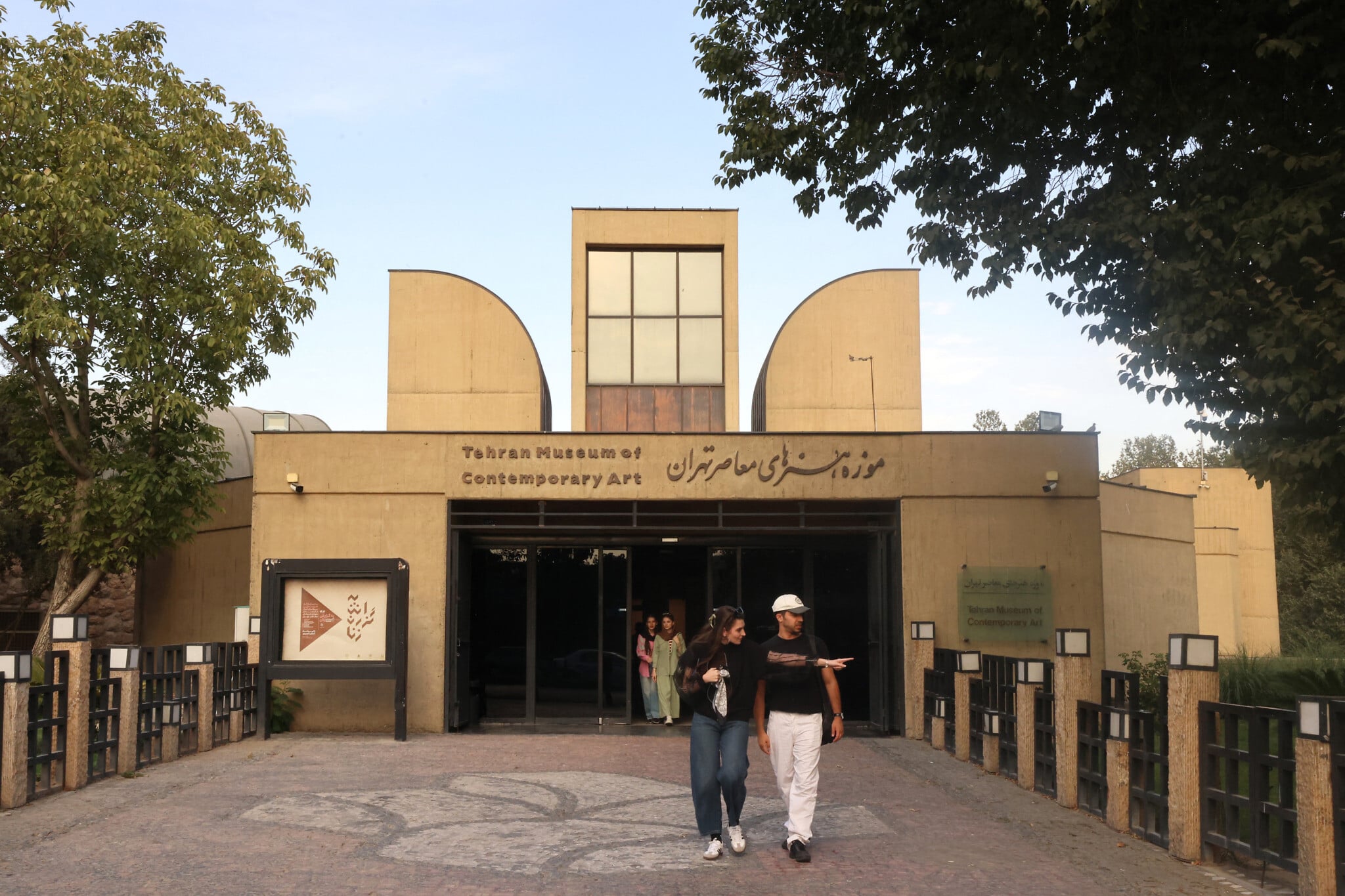
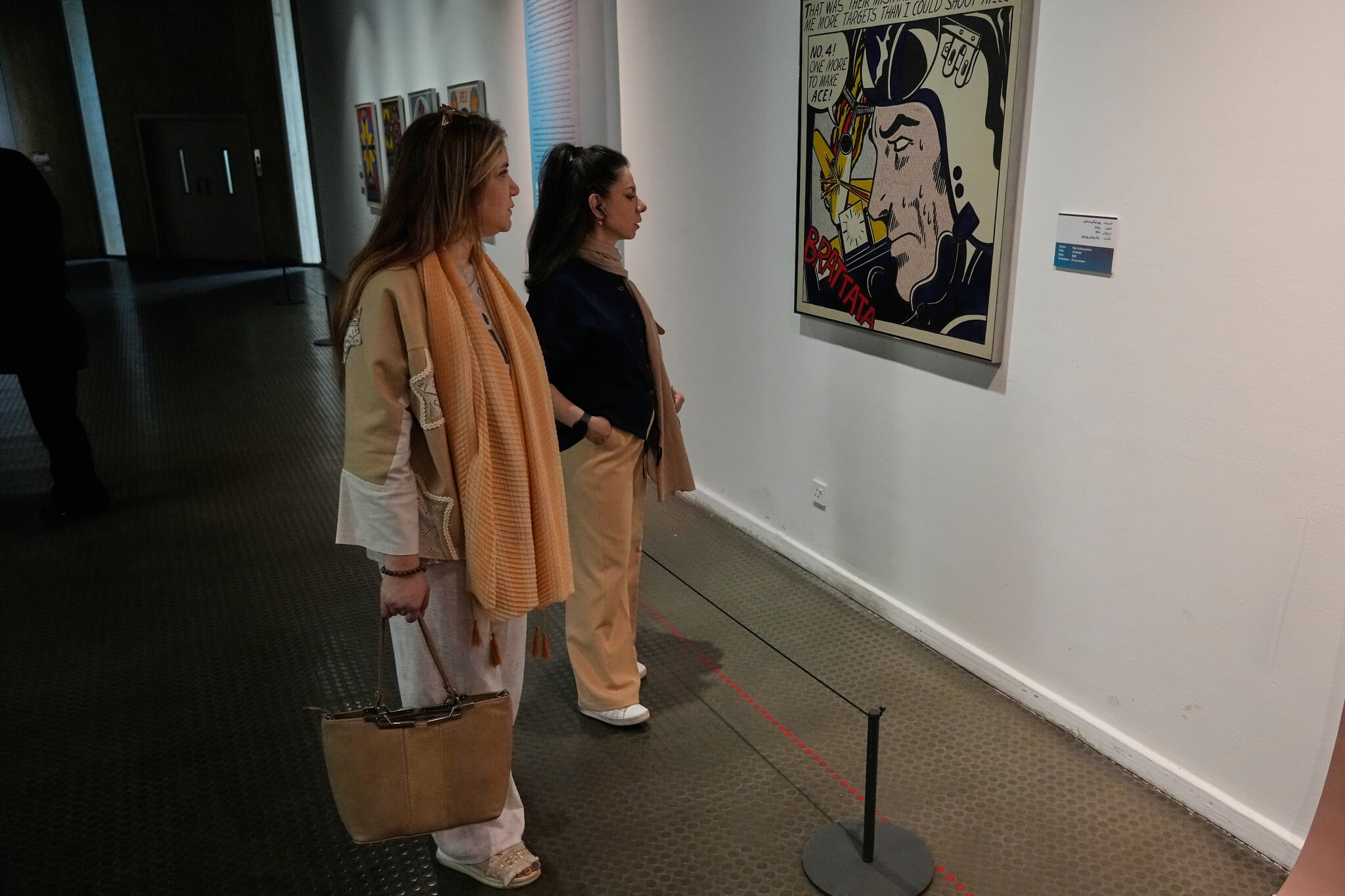
TEHRAN — The artworks were distinctly American — famed pieces in vivid colors wrestling with themes of war, violence, pop culture and commercialism. What was startling was where they were on display: In a museum in the Iranian capital, at a time the two countries were locked in conflict.
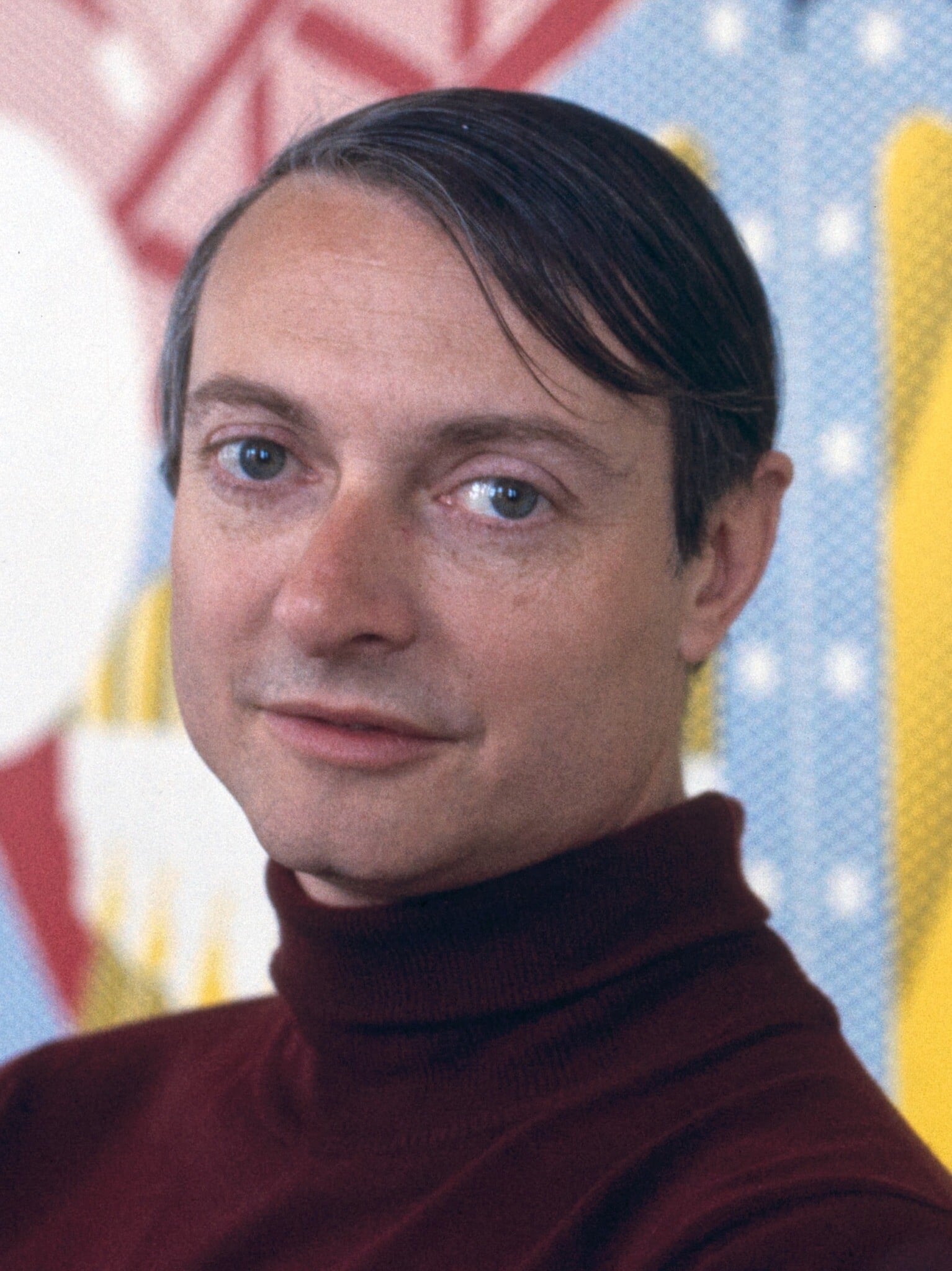
While the city’s streets were lined with anti-American billboards and posters, Tehran’s Museum of Contemporary Art opened an exhibit last week of six works by three American Pop artists of the 1960s — Roy Lichtenstein, Robert Indiana and James Rosenquist — whom, according to the museum’s head Reza Dabirinezhad, were mainly chosen for their anti-war themes. Also striking was that Lichtenstein was Jewish, born in New York in the 1920s to a Jewish family originally from Germany.
The works came from the museum’s large collection of masterpieces of American and European modern art that was acquired by the wife of the former shah in the 1970s. Most of it has been kept out of view since the Western-backed monarch was ousted by the 1979 Islamic Revolution.
The US and Israel launched their campaign against Iran on February 28, to degrade the Iranian regime’s military capabilities, distance threats posed by Iran — including its nuclear and ballistic missile programs — and “create the conditions” for the Iranian people to topple the Islamic regime, the military and other Israeli leaders have said. A ceasefire was announced by US President Donald Trump some six weeks later.
After living under bombardment for weeks, the young men and women strolling the gallery felt a resonance from the works.
Some contemplated Rosenquist’s “F-111,” a collage dating to the era of the US bombardment of Vietnam that critiques America’s military-industrial complex with images of a warplane’s fuselage, a nuclear mushroom cloud and a child’s face.
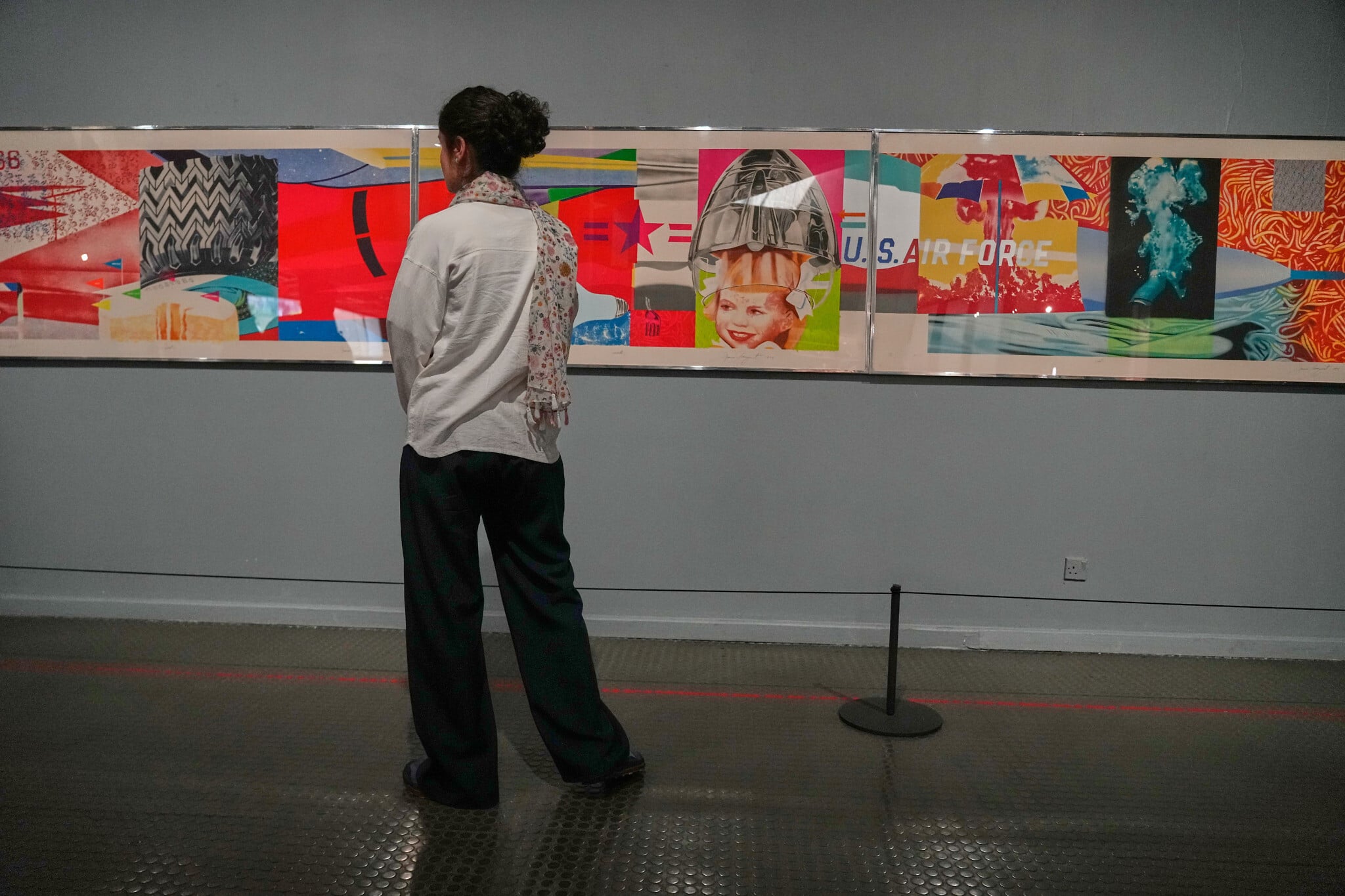
Nearby was “Brattata,” one of Lichtenstein’s characteristic paintings based on a comic book panel, this one of a fighter plane pilot shooting down an enemy craft.
“American artists have always had a really interesting way of ridiculing war, and that’s always fascinated me in their work,” said Ghazaleh Jahanbin, a Tehran artist visiting the show. “Maybe part of it, I don’t know, comes from their geographical distance from war itself.”
Dabirinezhad said the museum wanted the exhibit, titled “Art and War,” to respond to the “events unfolding around it.” So it selected pieces “that were either shaped by the experience of war or created as reactions to wars,” he told Iran’s semiofficial ISNA news agency.
The museum is government-run and comes under the authority of the regime’s Culture Ministry.
Yet pictures of the exhibit show several women visiting the museum without headscarves, which is illegal in Iran.
A collection acquired in the ’70s
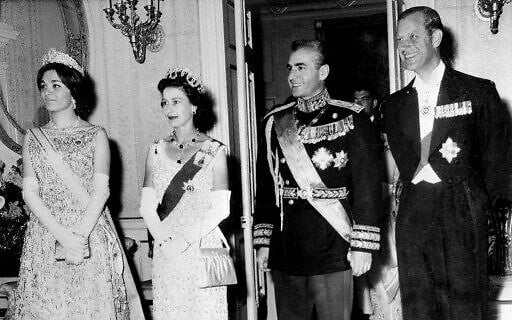
The museum’s collection has a storied history. The government of Shah Mohammad Reza Pahlavi built the museum and bought up treasures of Cubist, Surrealist, Impressionist, Abstract and Pop art in the 1970s, when booming oil prices were filling Iran’s coffers and the country was the closest US ally in the region.
The shah’s wife, former Empress Farah Pahlavi, largely selected the works from artists ranging from Pablo Picasso to Vincent Van Gogh, Francis Bacon and David Hockney. Among them were several Jewish artists, including Lichtenstein, Mark Rothko, Gisèle Freund and Camille Pissarro.
Bethany Montagano, curator of the 2016 exhibition “Pop for the People: Roy Lichtenstein” at the Skirball Cultural Center in Los Angeles, told the Jewish newspaper Forward at the time that while Lichtenstein very rarely mentioned his origins, they still had a significant impact on his life and art.
“He grew up on the Upper West Side of Manhattan,” she said. “Because he was Jewish, he could only live in certain apartment buildings. He couldn’t find housing at Ohio State, so he joined a Jewish fraternity, and spent a lot of time socializing with Jewish boys and girls. I don’t think it’s too much of a stretch to say it did impact his worldview — wanting to come from margins, from outside, and level the playing field.”
In 1989, Lichtenstein created a large mural for the Tel Aviv Museum of Art.
Just two years after the Tehran museum opened in 1977, the shah was toppled and theocratic rule by Shiite clerics was installed. The collection was packed away in the museum’s vault, untouched for decades to avoid offending Islamic values or creating the appearance of catering to Western sensibilities.
Since the beginning of the 2000s, the museum has occasionally brought out some pieces for temporary exhibits. The collection is believed to be worth several billion dollars. Even with Iran cash-strapped under Western sanctions, museum officials have ensured that the collection is not sold off. In 1994, Iran traded a Willem de Kooning painting from the collection for a prized manuscript of the Persian epic Shahnameh, or Book of Kings, from an American foundation.
Reopening an escape from anxiety of war
Museums and many other cultural activities have been shut down in Iran during the current war.
The shaky ceasefire in place since early April has allowed a reopening, though Dabirinezhad said only a few pieces were put on display in case war resumed and the works had to be rushed back to safe storage.
For Iranian art lovers, the reopening brought an escape from the anxiety of war and a chance to reconnect with culture.
“It was such a great thing to happen. A couple of weeks ago I was talking with my friends, and everybody was talking about how much they missed visiting museums,” said Jahanbin.
Fears remained high that the war could break out again. Iran and the US remain locked in a military standoff, with Iran sealing the Strait of Hormuz and the US blockading Iranian ports as they wrangle over negotiations for a resolution.
“This state of being undecided leaves you dazed and confused, everything is up in the air,” said Mohammad Sadegh Abbasi, one of the visitors perusing the exhibit. “I hope everything ends well soon and we get a secure and calm life.”
“Some of the works remind me of the scenes I saw [during the war],” he added.
The six works had been set to be on display until May 10, but the director said that each week, new ones related to the theme would be brought out of the collection for show.

[ad_2]
Source link

No Comment! Be the first one.