
[ad_1]
The series begins with an episode about Paul Nash, who joined up shortly after the war began. He first enlisted in the Artists’ Regiment, traditionally the regiment of choice for painters and sculptors. Frustrated by endless training exercises, he transferred to the Hampshire Regiment in the hope of seeing action, and saw it soon enough. He was sent to the front at Ypres in 1917, but stretchered back to England not long after, having damaged his ribs by falling into a trench while sketching – a comical mishap which probably saved his life.
During the months he spent recuperating, the Battle of Passchaendale was raging: 200,000 British soldiers dead or wounded, and Nash’s entire regiment wiped out. After his recovery, he returned as an official war artist, but determined to complete a very unofficial, personal mission. He wanted to tell the unvarnished truth about the war, to bring his message home to the warmongers back in Britain, “and may it burn their lousy souls”.
Above all Nash painted war-torn landscapes: the mortar-scarred mud of Flanders, festooned with barbed wire and awash with pools of viscous, oily water. He left out the dead and the injured, partly because their wounds were so horrific that he believed it would have been disrespectful to depict their mutilated faces and bodies: instead, he anthropomorphised the landscapes of war, depicted scorched earth and churned up soil with a violence that implied the disfigurement of flesh.
After the war, Nash turned to Surrealism, an art of enigmatic forms and mysterious, nightmarish juxtapositions which seemed, to many, the perfect reflection of a world gone mad. His lungs had been damaged by mustard gas and his life would be sadly cut short while he was still in middle age. But Nash lived long enough to see the Second World War and become one of its greatest chroniclers in paint. Totes Meer, or Dead Sea, his depiction of a great wave of downed German fighter planes, is one of the most haunting British paintings of the twentieth century. It was also, sadly, one of Nash’s last creations.
[ad_2]
Source link
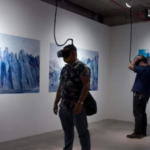
How to create virtual art galleries
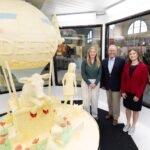
Butter sculpture defies gravity at NYS Fair
No Comment! Be the first one.